Economic Thinkers and Their Ideas
“In Economics the majority is always wrong”
John Kenneth Galbraith
One thing that all great economist have in common, regardless if they made their contributions 30 or 300 years ago, is that they designed solutions to the problems plaguing the economic systems of their day. With the benefit of hindsight it is easy to see why economic theories of the past failed, however at the time this was less evident. Take Thomas Malthus for example.
Thomas Malthus on Populations

“The power of population is indefinitely greater than the power in earth to produce subsistence for man.“
-Thomas Malthus
Born to a noble family in Britain in 1766 Thomas Malthus witnessed the beginning of the industrial revolution. People in Britain fled their farmlands in droves to work in crowded unsanitary cities and all this at the height of the Napoleonic Wars. Malthus noted how the poor were at the mercy of many populations checks, such as disease, starvation and war. Because of these experiences Malthus wrote an essay on the principles of population. In this work Malthus stated that due to the contrast between the slow growth of food supplies relative to quickly multiplying populations a cycle of misery would exist where populations would continue to outgrow food supplies and result in famine, disease and war which would limit the populations. Malthus’s solution to this cycle of misery was to have populations use more birth control methods such as abstinence to combat rapidly expanding populations. Now, Malthus was right about populations for a very long time for the previous hundred thousand years earth’s total population has stayed well under one billion. Malthus was however wrong in the long run as the earths population is now 7.5 billion. This miscalculation can be explained by the agricultural revolution which dramatically improved the rate of food production per acre through innovations like selective breading, aeration of fields and the seed press. This increase in food supply would result in a massive increase in the world’s population. So though Malthusian theory was correct for most of history however as the economy became more efficient in food production and populations grew it would be proven false. However in its day it proposed a solution to the very real problem of over population.
Adam Smith, the Father of modern Economics
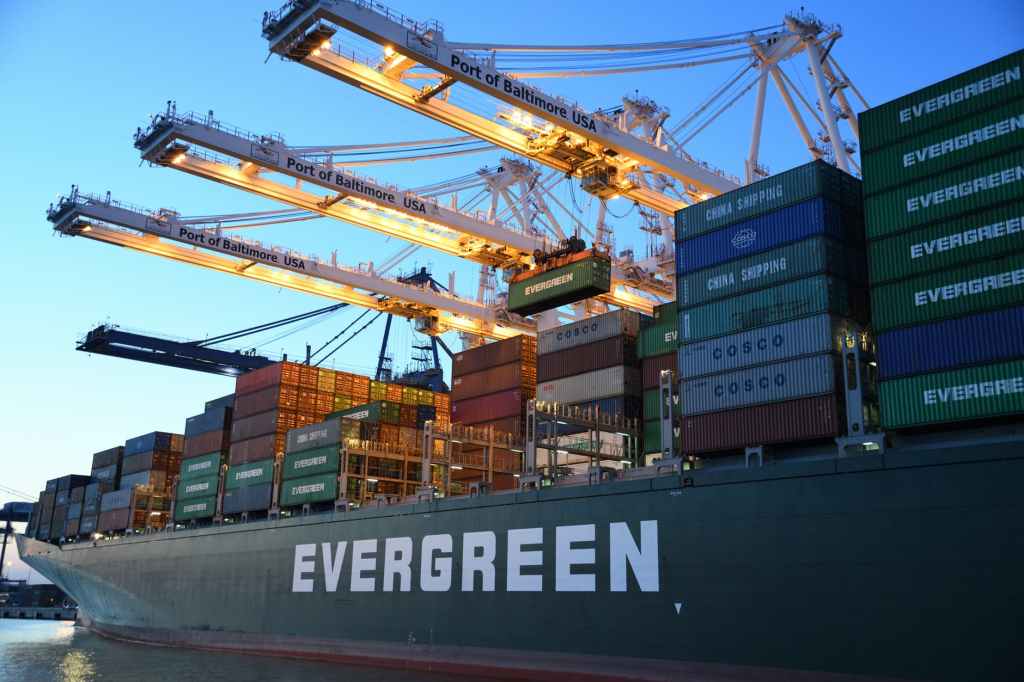
Before the now generally accepted practice of free trade the nations of earth practiced a concept know as Mercantilism. The idea behind mercantilism is that a nations wealth can only be gained through importing more products than they export, thus allowing precious metals to accumulate in their treasuries. This policy would result in nations levying massive tariffs against foreign goods which would severely discourage trade. This age of mercantilism combined with the start of the industrial revolution that Adam Smith would begin his study of economics.
“A nation is not made wealthy by the accumulation of shiny metals, but it enriched by the prosperity of its people.”
-Adam Smith
Adam Smith would go onto create several relevant theories on economics, one of which being the laissez faire economic policy. This laissez faire policy would stipulate that governments should have little influence over the economy so its may grow with free trade, instead of being hindered by tariffs and other interventions. The idea behind this policy is that the economy would be guided by consumer demand characterized as the “invisible hand”. Therefore the economy would produce what the people desired and in doing so become prosperous. This policy backs away from mercantilism which had many inefficiencies in its design.
“It is not the benevolence of the butcher, the brewer or the baker that we expect our dinner but from their regard in their own self interest “-Adam Smith
Another relevant concept that Adam Smith designed was that of the “division of labor”, which stipulated that when manufacturing goods a specialization of labor would result in vastly more efficient production. This idea was inspired by the industrial revolution where workers were using increasingly specialized skill sets in factories to vastly increase production.
Adam Smith’s most famous work the Wealth of Nations was created as a guide to increase the wealth of nations, he believed the best way to achieve this goal was through a increase of trade and competition through his laissez faire economy which discouraged government intervention, and the specialization of labor. These theories would go on to create vast amounts of wealth across the industrialized world. Until it all came crashing down during the Great Depression.
The Great Depression would prove the one flaw in Adam Smith’s theories. The lack of government regulation of the US securities market would result in the world financial catastrophe the world has ever seen. Again in 2008 the whole economy would crash due the lack of government regulation in the US investment banking system. Therefore it is evident that a government free economy is not impervious as Adam Smith suggested. “The Great Depression like most other times of severe unemployment, was caused by government mismanagement, rather than inherit instability in the private economy “-Milton Freedman However at the time Adam Smith correctly assert that free trade or laissez faire economies were far more productive and efficient than those built around mercantilism.
Keynesian Economics
“Ideas shape the course of history”
– John Maynard Keynes
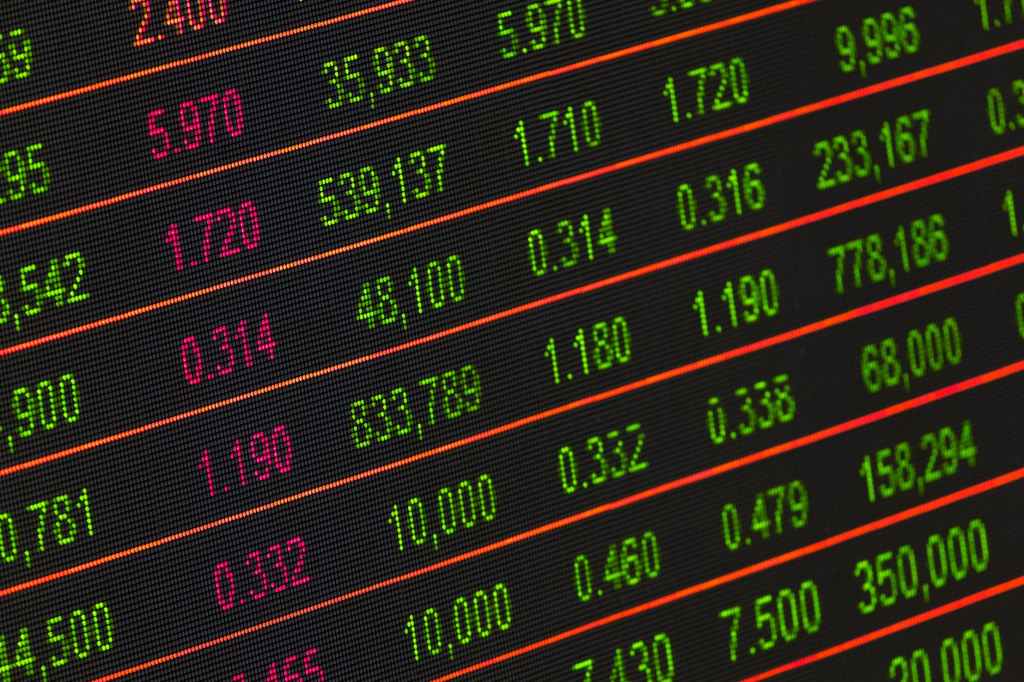
The Great Depression was a time government penny pinching and high tariffs on imported good. These policies were thought to be able to help the economy, however they further exacerbated the problem as they decreased the monetary supply in circulation which caused business and the economy to stagnate. Unemployment would affect nearly one quarter of the population. However amidst all this economic turmoil one economist devised a contrarian but ingenious solution to the recession. John Maynard Keynes suggested the government start funding massive public work projects. These projects served two purposes, firstly to get the unemployed producing and contributing to the economy, and increasing the supply of money in circulation. Now that the economy was at more production capacity and more money was going around businesses, the economy slowly recovered. Keynesian economics worked back in the 1930s but can still be seen today. Hong Kong Recently announced that it would be giving its citizens approximately 1,000$ to stimulate the economy as it attempts to escape it’s economic downturn amidst the widespread protests and Corona Virus. Annalists project it could boost Hong Kong’s economy by 1% in-spite of its unstable political environment. Keynes saw that recessions were caused by to little spending and not to much. This line of thinking was of course inspired by the Great Depression and shows how his economic policy was a product of the economic environment he experienced.
Karl Marx, Das Capital

“Sell a man a fish, he eats for a day, teach a man to fish, you ruin a wonderful business opportunity.“
-Karl Marx
Karl Marx grew up in the midst of the industrial revolution, where working conditions were poor, child labor was common, and the only ones benefiting from this technological development were the capitalists who owned the means of production. Marks also saw how all the worlds poor could be clothed fed and sheltered but were not due to the greed of the capitalists. Marks believed the struggle between rich and poor was a continuation of a struggle that has lasted for all of history. A struggle between the oppressed which he called the proletariat and the oppressors which he called the bourgeoisie. He sought to put an end to the rampant wealth inequality which became a trade mark of Capitalism in favor of his new economic system called Communism. Communism’s main idea was that the means of production would be in the hands of the people and not the industrialists so that society might share in its wealth. Marx’s believed that any profit beyond the material and labor costs which went into the production of a item was theft. He called profit “surplus value” and believed it was the way in which the bourgeoisie stole from the hard work of the proletariat. In Marx’s ideal society workers would be paid relative to the labor they work. Though Mark’s intentions of bringing about better living conditions for the proliferate were noble one thing he did not consider is what would happen when the state which had control over the means of production would begin to misuse this power. Examples can be seen in 1950’s Communist China where a staggering 50 million people starved to death due to policies in which the state exerted total control over food production. Another example of a Communist state killing millions using economic policy can be seen in Stalin’s Soviet Union where nearly five million Kulaks would be killed during his five year plan for economic growth. Even today in North Korea and China millions are interned or starving to death as a result of the communist power structure. Marx had a excellent solution to the problem of Capitalists abusing the working class, but did not consider what would happen if the state, which had political military and economic power were to go astray. His ideas of the state owning the means of production have been very successful when used in moderation, many Nordic countries like Sweden and Denmark have state owned industries centered around natural resources like oil so that all citizens may profit from the resources of the country which all are apart of. This use of moderate communist policy has been extremely successful, proving Karl Marx’s ideas were not very far fetched when implemented properly.
In Conclusion
The connection between all great economists and their ideas is very simple, all had a specific economic problem that they developed common sense solutions for. Malthus desired to stop overpopulation by limiting birthrates. Smith wanted to stop stagnation in mercantilism economies by encouraging trade. Keynes sought to end the Great Depression by encouraging money in circulation. Marx’s sought to put an end to the human cost of Capitalism by creating a society in which all benefit from the means of production. Once put into practice each of these theories would develop major flaws, but each one is a major improvement upon the last theory of economics, and if this cycle continues to develop, and economist learn from past mistakes we may soon see a flawless economic system.
Bibliography
Lee, YenNee. “Hong Kong’s Cash Handout Could Boost the Economy by 1%, Says Financial Secretary.” CNBC, CNBC, 28 Feb. 2020, http://www.cnbc.com/2020/02/28/cash-handout-could-boost-hong-kong-economy-by-1percent-financial-secretary.html.
Smith, Adam. The Wealth of Nations. Seven Treasures Publications, 2009.
Malthus, Thomas Robert. An Essay on the Principles of Population: or, A View of Its Past and Present Effects on Human Happiness. Irwin, 1963.
 Economic Thinkers